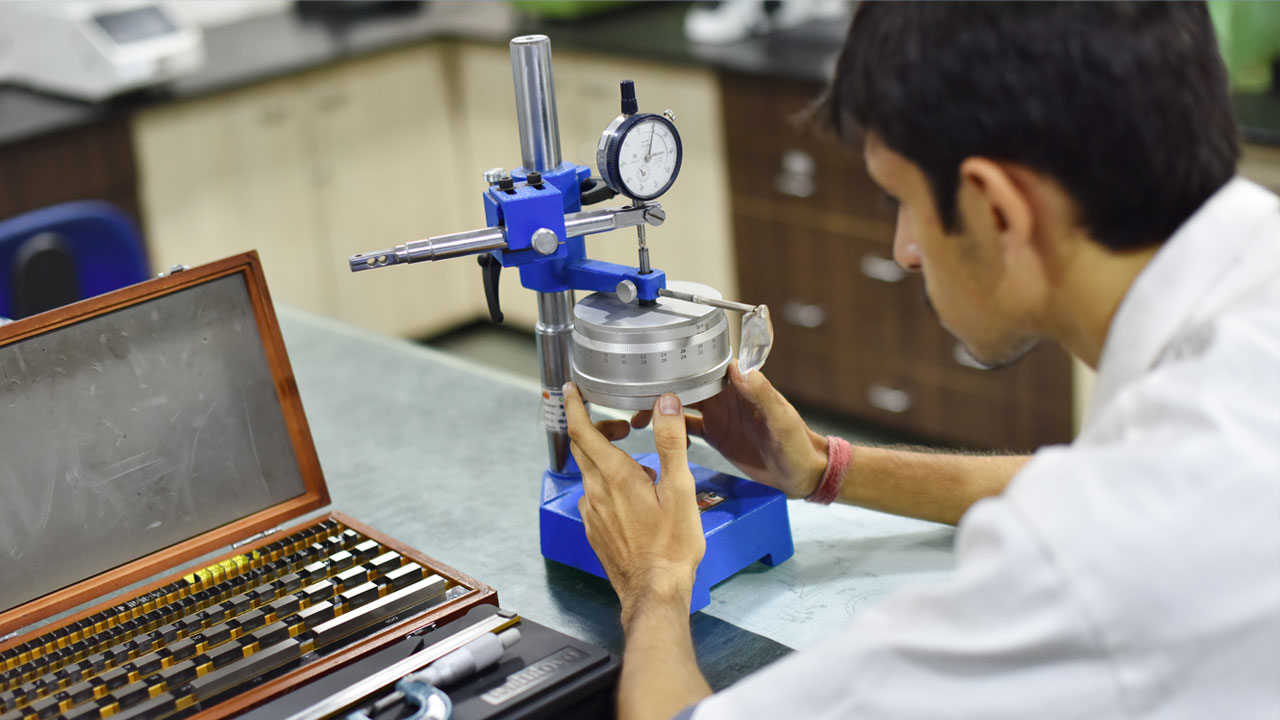
Engine valves operate in one of the most demanding environments inside an internal combustion engine. They must open and close repeatedly at high speed while maintaining accurate sealing, controlling gas flow, transferring heat, and resisting wear under continuously changing thermal and mechanical loads.
For this reason, engine valve quality cannot be established through final inspection alone. Material integrity, dimensional accuracy, surface condition, process consistency, and traceability must be controlled throughout manufacturing.
An engine valve may appear simple in form, but variation in critical characteristics can affect seating, guide clearance, heat transfer, wear behaviour, and ultimately engine reliability. Effective quality control therefore begins before machining and continues through every major manufacturing and verification stage.
Why Engine Valve Quality Control Is Different
Engine valves are precision functional components rather than passive mechanical parts.
During operation, an intake valve controls airflow into the combustion chamber, while an exhaust valve is exposed to significantly higher thermal stress as hot combustion gases leave the cylinder. Both must repeatedly seat accurately against the valve seat while moving smoothly within the guide.
Their performance therefore depends on several characteristics working together:
- Material selection and metallurgical integrity
- Dimensional accuracy
- Seating geometry and concentricity
- Surface finish
- Heat treatment and surface treatment
- Structural integrity
- Repeatability from component to component
Variation in any one of these areas can affect the performance of the complete valve system.
This is why quality assurance in engine valve manufacturing is best understood as a process-control discipline, not simply a final pass-or-fail inspection.
1. Material Control Begins Before Manufacturing
Quality starts with the material entering the manufacturing process.
Engine valve materials must be selected according to the operating conditions the valve will experience. Intake and exhaust valves can face different thermal, oxidation, wear, and mechanical requirements, which means material specifications cannot be treated as interchangeable.
Incoming material should therefore be verified against defined material specifications and traceability requirements before entering production.
Depending on the valve design and application, material control may include verification of:
- Material grade
- Chemical specification
- Dimensional condition of incoming stock
- Batch traceability
- Customer-specific material requirements
The objective is straightforward: prevent material variation from becoming process variation later.
Once unsuitable material enters forging or machining, dimensional precision alone cannot compensate for inappropriate metallurgical properties.
2. Process Control During Forging
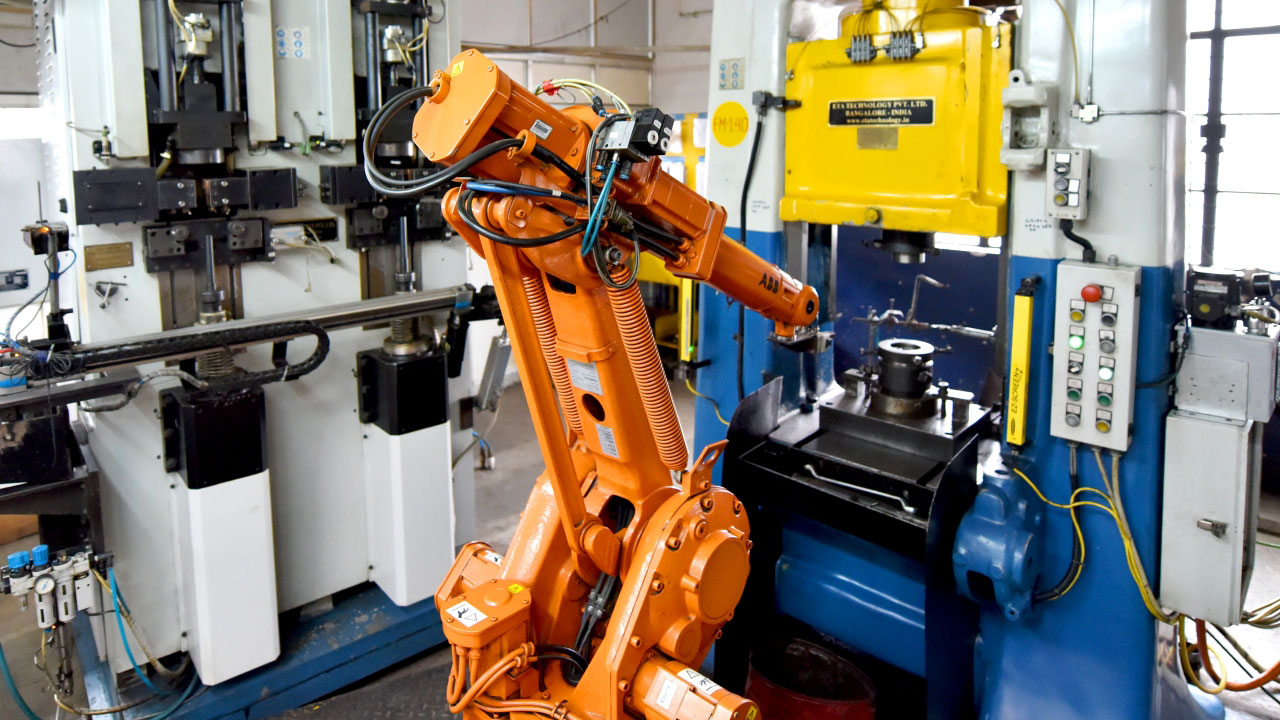
Forging plays an important role in establishing the basic geometry and material integrity of an engine valve.
At AVR (Vikram) Valves, engine valve production includes controlled forging operations such as electro-upsetting and precision forging, supporting consistent material flow and repeatable valve formation.
From a quality perspective, forging must be controlled for more than shape alone.
Important considerations include:
- Consistent valve head formation
- Controlled material flow
- Dimensional repeatability
- Surface condition
- Absence of cracks or visible defects
- Sufficient allowance for subsequent machining
Variation introduced during forging can influence every downstream operation. Stable tooling, controlled process parameters, and inspection between production stages therefore contribute directly to final valve consistency.
3. Dimensional Accuracy During Machining
Machining converts the forged valve into a precision functional component.
Critical dimensions must work together as a system. Stem diameter, valve length, head geometry, seating surfaces, and application-specific features affect how the valve interacts with guides, seats, springs, and the rest of the valve train.
Dimensional control therefore focuses not only on individual measurements, but also on the geometric relationship between critical features.
| Inspection Area | What Is Controlled | Why It Matters |
|---|---|---|
| Stem diameter | Dimensional consistency | Supports correct valve-guide clearance |
| Overall valve length | Component geometry | Influences valve-train fit and operation |
| Valve head geometry | Shape and dimensional accuracy | Supports correct combustion-chamber function |
| Seat geometry | Seating accuracy and alignment | Supports sealing and heat transfer |
| Concentricity / run-out | Relationship between critical features | Helps maintain consistent seating and valve movement |
| Surface finish | Machined surface condition | Influences friction, wear, and sealing behaviour |
The exact tolerances depend on valve design and application requirements, but the underlying principle is the same: engine valve performance depends on controlled geometry, not isolated measurements.
4. Surface Finish and Contact Areas
Surface condition is another critical quality parameter.
Valve stems move repeatedly within guides, while the valve face makes repeated contact with the valve seat during engine operation. Poor surface condition can increase friction, accelerate wear, affect sealing, and reduce component life.
Surface-quality verification therefore needs to focus on critical functional areas such as:
- Valve stem finish
- Valve face condition
- Seating surfaces
- Treated or coated surfaces
- Dimensional integrity after finishing operations
Inspection at this stage helps confirm that machining and finishing processes have produced the required surface characteristics without introducing unwanted variation or damage.
5. Heat Treatment and Surface Treatment Verification
Engine valves often rely on heat treatment and surface engineering to achieve the required combination of hardness, wear resistance, fatigue resistance, and thermal stability.
AVR (Vikram) Valves’ engine valve manufacturing capabilities include processes such as nitriding, hard chrome application, and controlled heat-treatment operations for relevant valve designs.
From a quality-control perspective, these stages must be managed as controlled manufacturing processes rather than treated simply as finishing operations.
Verification should confirm that:
- The specified treatment has been applied correctly
- Critical dimensions remain within requirement after treatment
- Surface condition is consistent
- Functional areas remain suitable for their intended operating conditions
Because heat and surface treatments can influence both material behaviour and final dimensions, inspection after treatment is an important part of maintaining manufacturing consistency.
6. Crack Detection and Structural Integrity
Some defects cannot be identified through dimensional inspection alone.
Forging, heat treatment, machining, and repeated handling can introduce or reveal defects that may not be immediately visible. Structural integrity therefore needs to be verified at appropriate stages of production.
AVR (Vikram) Valves applies crack-detection controls as part of its engine valve quality process, helping identify defects that could compromise performance before components reach final acceptance.
This is particularly important because an engine valve operates under repeated cyclic loading. A defect that appears insignificant during static inspection can become a failure initiation point under actual operating conditions.
7. In-Process Inspection Is More Valuable Than End-Stage Sorting
A mature quality system does not wait until the component is complete before identifying problems.
In-process inspection allows variation to be detected closer to the point where it is created.
This provides several advantages:
- Faster identification of process drift
- Reduced accumulation of defective output
- Better traceability
- Earlier corrective action
- Lower dependence on final sorting
- Greater production stability
At AVR (Vikram) Valves, quality control is integrated throughout the engine valve manufacturing process, rather than being isolated at final inspection.
Design validation, material control, process monitoring, inspection, and documented quality procedures work together to support repeatable output.
This approach becomes particularly important in long-term OEM programs, where consistency across large production volumes can matter as much as the acceptance of an individual component.
8. Final Inspection Confirms the Complete Process
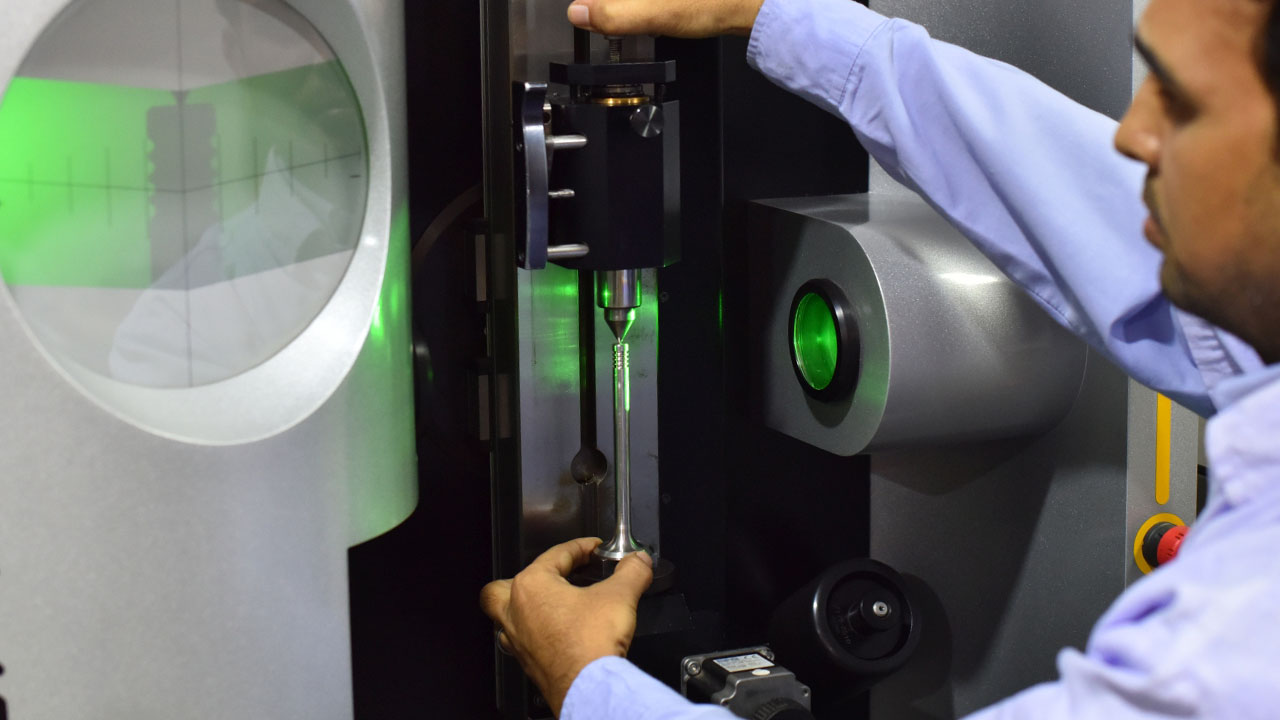
Final inspection remains essential, but its role changes when upstream manufacturing processes are already controlled.
Rather than compensating for unstable production, final verification confirms that the completed engine valve meets defined dimensional, visual, and application requirements before release.
Depending on the valve design and customer requirement, final checks may include:
- Critical dimensional characteristics
- Surface condition
- Visual inspection
- Product identification
- Crack-detection status
- Traceability requirements
The goal is not simply to identify defective parts at the end of production. The broader objective is to confirm that the complete manufacturing system has produced a component that meets its defined requirements.
9. Traceability Supports Consistent Quality
Traceability connects inspection results with the manufacturing process that produced them.
A controlled quality system should be able to relate production batches or identified components to relevant process and inspection information.
This becomes particularly important when:
- Investigating deviations
- Implementing corrective actions
- Managing engineering changes
- Reviewing recurring process issues
- Supporting customer requirements
Product identification and traceability therefore serve a purpose far beyond record keeping. They provide the information needed to investigate variation and support continuous improvement.
10. Quality Systems Create Repeatability
Inspection equipment alone does not create quality.
Repeatability comes from the system surrounding production: defined procedures, documented controls, clear responsibilities, process validation, corrective-action mechanisms, and continuous monitoring.
AVR (Vikram) Valves operates within an IATF 16949-certified quality framework, supported by structured quality assurance practices across its engine valve manufacturing operations.
This system-level approach helps align engineering, production, and quality teams around a common objective: maintaining stable output across different valve designs, production volumes, and customer programs.
How Quality Control Affects Engine Valve Performance
The value of quality control becomes visible when the valve enters service.
Accurate dimensions support proper fitment and movement. Controlled seating geometry supports sealing and heat transfer. Suitable materials and surface conditions help resist wear and thermal stress. Structural integrity reduces the risk of premature failure.
Quality control therefore does more than determine whether an engine valve passes inspection.
It helps determine whether the component can consistently perform the function it was engineered to perform.
For manufacturers supporting different engine platforms and operating conditions, this consistency is especially important. Valve geometry, materials, duty cycles, temperatures, and application requirements may vary, but the need for disciplined process control remains constant.
Building Reliability Into Every Engine Valve
Reliable engine valves are the result of controlled manufacturing, not a single inspection operation.
Material verification, forging control, precision machining, heat and surface treatment, dimensional inspection, crack detection, traceability, and documented quality systems all contribute to the final component.
At AVR (Vikram) Valves, these controls are integrated into an engine valve manufacturing operation built around repeatability, process discipline, and long-term performance.
Have an engine valve requirement or application-specific specification? Contact AVR (Vikram) Valves to discuss your technical and production requirements.