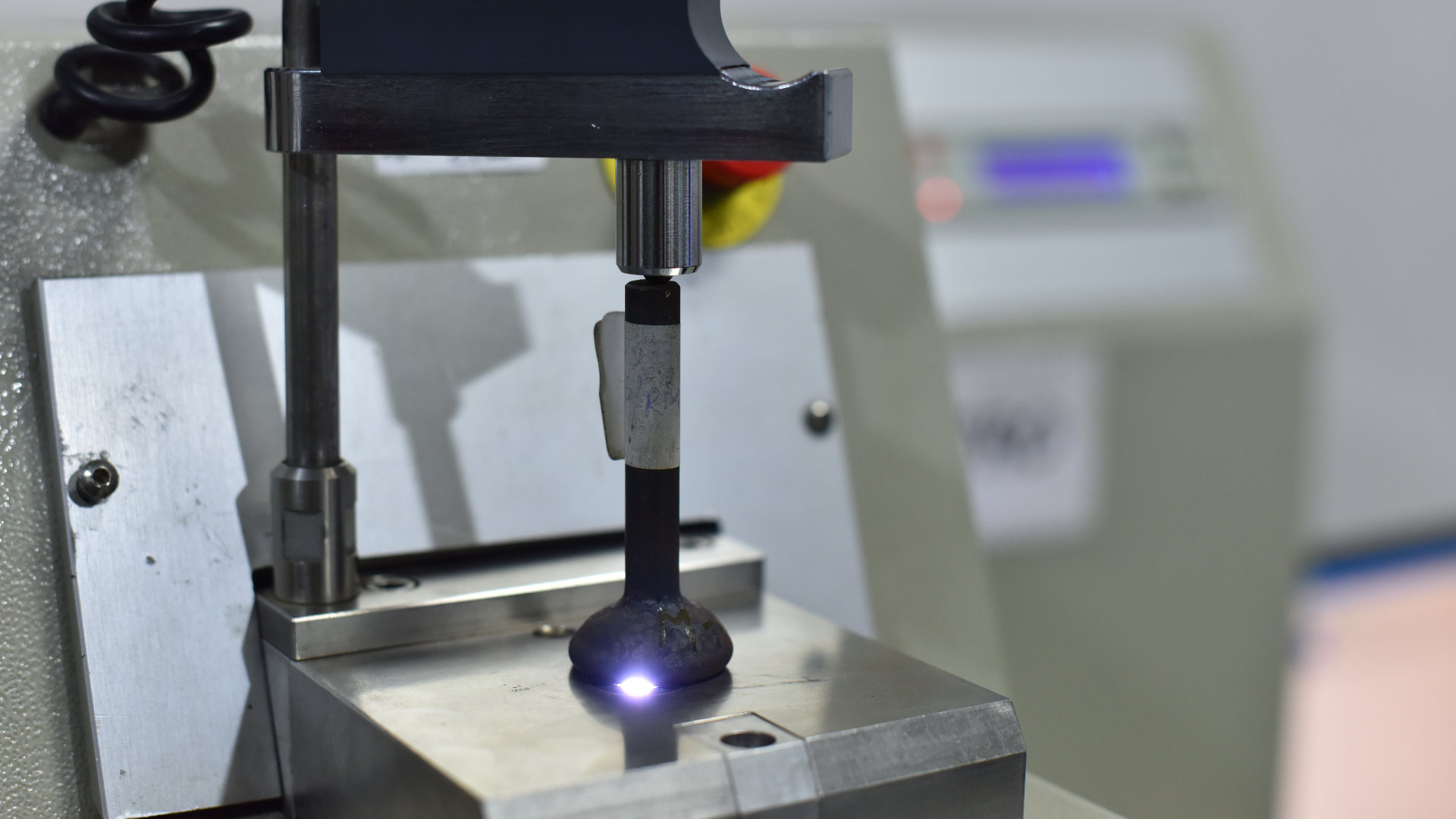
Engine valve technology has evolved alongside the internal combustion engine itself.
As engines have become more powerful, compact, efficient, and demanding, the operating environment inside the combustion chamber has changed substantially. Higher combustion temperatures, greater cylinder pressures, increased engine speeds, tighter emissions requirements, and longer service expectations have placed progressively greater demands on intake and exhaust valves.
Meeting those demands has required more than improvements in valve geometry or manufacturing precision. Material selection has become critical to engine valve engineering.
Modern engine valves may use different steel grades, superalloys, hard-facing materials, surface treatments, and construction methods depending on where the valve operates and the thermal and mechanical loads it must withstand.
Understanding this evolution helps explain why there is no single “best” engine valve material. The right choice depends on the application.
Why Engine Valve Materials Matter
An engine valve performs several functions simultaneously.
It must open and close accurately, maintain sealing against the valve seat, transfer heat, resist wear, and retain dimensional stability while operating under repeated mechanical loading.
The conditions faced by an intake valve and an exhaust valve can also be very different.
An intake valve is cooled to some extent by the incoming charge and generally operates under lower thermal stress. An exhaust valve is exposed directly to hot combustion gases as they leave the cylinder, creating substantially greater demands for heat resistance, oxidation resistance, and material stability.
Material selection therefore needs to account for characteristics such as:
- Operating temperature
- Mechanical strength
- Fatigue resistance
- Oxidation and corrosion resistance
- Wear resistance
- Heat-transfer requirements
- Valve geometry
- Engine speed and duty cycle
- Fuel and combustion conditions
- Expected service life
As engine performance requirements increased, valve metallurgy had to evolve accordingly.
From General-Purpose Steels to Application-Specific Valve Materials
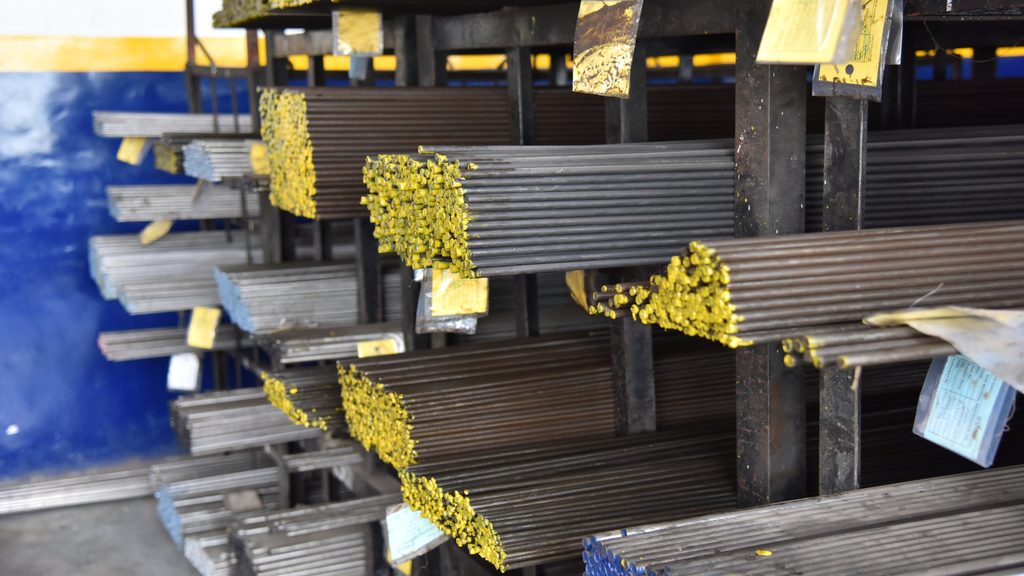
Earlier engine designs operated under less demanding thermal and mechanical conditions than many modern automotive, commercial, industrial, and heavy-duty engines.
As combustion temperatures and engine speeds increased, general-purpose materials became less suitable for demanding valve applications.
Engine valve development therefore moved toward specialized heat-resistant steels and advanced alloys engineered to retain their properties under higher thermal and mechanical loads.
Today, material selection is typically application-specific rather than universal.
An intake valve may prioritize strength, hardness, wear resistance, and dimensional stability. An exhaust valve may require significantly greater resistance to heat, oxidation, corrosion, and thermal fatigue.
This distinction has contributed to the widespread use of martensitic steels, austenitic steels, superalloys, and hard-facing materials in modern engine valve design.
Martensitic Steels: Strength and Wear Resistance
Martensitic steels are commonly used where mechanical strength, hardness, and wear resistance are key requirements.
Their properties make them suitable for a range of valve applications where operating temperatures remain within the material’s performance capability.
Depending on the engine design, martensitic steels can offer:
- Good tensile strength
- Controlled hardness
- Resistance to mechanical wear
- Dimensional stability
- Reliable fatigue performance
Heat treatment plays an important role in developing these characteristics.
However, as valve operating temperatures rise, strength alone is not enough. Oxidation resistance and thermal stability become increasingly important, which is where other material families come into play.
Austenitic Steels for Higher Thermal Loads
Austenitic steels are used where resistance to elevated temperature, oxidation, and corrosion becomes more critical.
This makes them particularly relevant to exhaust-valve applications.
Exhaust valves operate in direct contact with hot combustion gases and must retain useful mechanical and surface properties while repeatedly cycling through high-temperature conditions.
Austenitic steels can provide improved thermal and oxidation resistance compared with materials optimized primarily for lower-temperature strength and wear resistance.
The specific material grade depends on engine design, combustion conditions, valve geometry, and required service life.
This is why modern engine valve design increasingly depends on matching metallurgy to operating conditions, rather than applying one material specification across every engine platform.
Superalloys for Severe Operating Conditions
Some engine applications operate beyond the performance range of conventional valve steels.
Severe exhaust temperatures, sustained heavy-duty operation, high specific output, and demanding combustion conditions can require materials with greater high-temperature strength and oxidation resistance.
For these applications, AVR (Vikram) Valves offers superalloy engine valve materials including Inconel Steel and Nimonic Steel.
These high-performance alloys are selected for environments where material stability under heat is especially important.
Their engineering advantages can include:
- High-temperature strength
- Resistance to oxidation
- Improved thermal stability
- Resistance to material degradation under severe operating conditions
- Suitability for demanding exhaust-valve applications
Superalloys are not required for every engine valve. Their value lies in applications where conventional steels would face excessive thermal or mechanical stress.
The material must therefore be selected according to the actual duty cycle and operating environment rather than simply by choosing the most advanced alloy available.
When One Material Is Not Enough: Bimetallic Engine Valves
More demanding applications can create conflicting material requirements within the same valve.
The valve head may require strong resistance to high-temperature oxidation and thermal loading, while the stem may benefit from a different combination of strength, wear resistance, and surface characteristics.
Bimetallic construction addresses this challenge by using different materials in different regions of the valve.
The engineering principle is straightforward: instead of forcing one alloy to satisfy every requirement, materials can be selected according to the function of each section.
This allows valve designers to balance:
- Thermal resistance
- Mechanical strength
- Wear behaviour
- Material efficiency
- Application-specific performance
Bimetallic construction is therefore not simply a more complex manufacturing method. It is a material-engineering solution for applications where different areas of the valve face distinctly different operating demands.
Surface Engineering Extends Material Performance
The evolution of engine valve materials has not been limited to bulk metallurgy.
Surface engineering has become equally important.
The base material provides structural and thermal properties, while selected surface treatments can improve the performance of critical functional areas.
Depending on valve design and application requirements, engine valve surface engineering may include processes such as:
- Nitriding
- Hard chrome application
- Localized hardening
- Hard-facing
- Application-specific surface treatments
AVR (Vikram) Valves uses processes such as nitriding and hard chrome for relevant Engine Valve designs.
These treatments can help improve:
- Surface hardness
- Wear resistance
- Friction behaviour
- Corrosion resistance
- Service durability
The important point is that base material and surface treatment must be considered together.
A high-performance alloy does not eliminate the need for appropriate surface engineering, just as a surface treatment cannot compensate for an unsuitable base material.
Hard-Facing Alloys for Critical Seating Areas
The valve face and seating region experience repeated mechanical contact while also being exposed to heat and combustion products.
For demanding applications, hard-facing alloys such as Stellite grades can be used on critical contact surfaces to improve resistance to wear and hot corrosion.
AVR (Vikram) Valves offers engine valve solutions using Stellite-grade hard-facing materials where application requirements justify them.
These materials are particularly useful when the seating surface must maintain geometry and surface integrity over extended operating periods.
Hard-facing can help support:
- Wear resistance at the valve face
- Resistance to hot corrosion
- Longer seating-surface life
- Stability under repeated thermal and mechanical loading
As with superalloys, hard-facing should be application-driven. Not every engine valve needs the same material system or treatment.
Good valve engineering begins with understanding where the component operates and what failure mechanisms it must resist.
Materials Offered for Engine Valves
Depending on the application, Engine Valves are available in the following material families:
| Material Family | Typical Engineering Role | Key Characteristics |
|---|---|---|
| Martensitic Steels | Moderate thermal-duty valve applications | Strength, hardness, wear resistance |
| Austenitic Steels | Higher-temperature valve applications | Heat, oxidation, and corrosion resistance |
| Inconel Steel | Severe thermal environments | High-temperature strength and oxidation resistance |
| Nimonic Steel | High-temperature and high-load applications | Thermal stability and high-temperature mechanical performance |
| Stellite Grades | Hard-facing on critical seating areas | Wear resistance and hot-corrosion resistance |
This range allows material selection to be aligned with engine duty, valve location, operating temperature, wear conditions, and service expectations.
Material Selection Must Be Connected to Valve Design
Metallurgy cannot be considered independently of valve geometry and manufacturing.
Stem diameter, head geometry, seating design, surface finish, heat treatment, machining accuracy, and operating clearance all influence how the material performs in service.
For example, a superalloy may provide excellent thermal resistance, but the valve still depends on:
- Accurate seating geometry
- Controlled stem dimensions
- Appropriate surface finish
- Consistent heat treatment
- Structural integrity
- Correct interaction with guides and seats
This is why modern engine valve development combines material engineering with controlled manufacturing and quality assurance.
The finished engine valve’s performance comes from the complete system, not the alloy specification alone.
Different Applications Create Different Material Demands
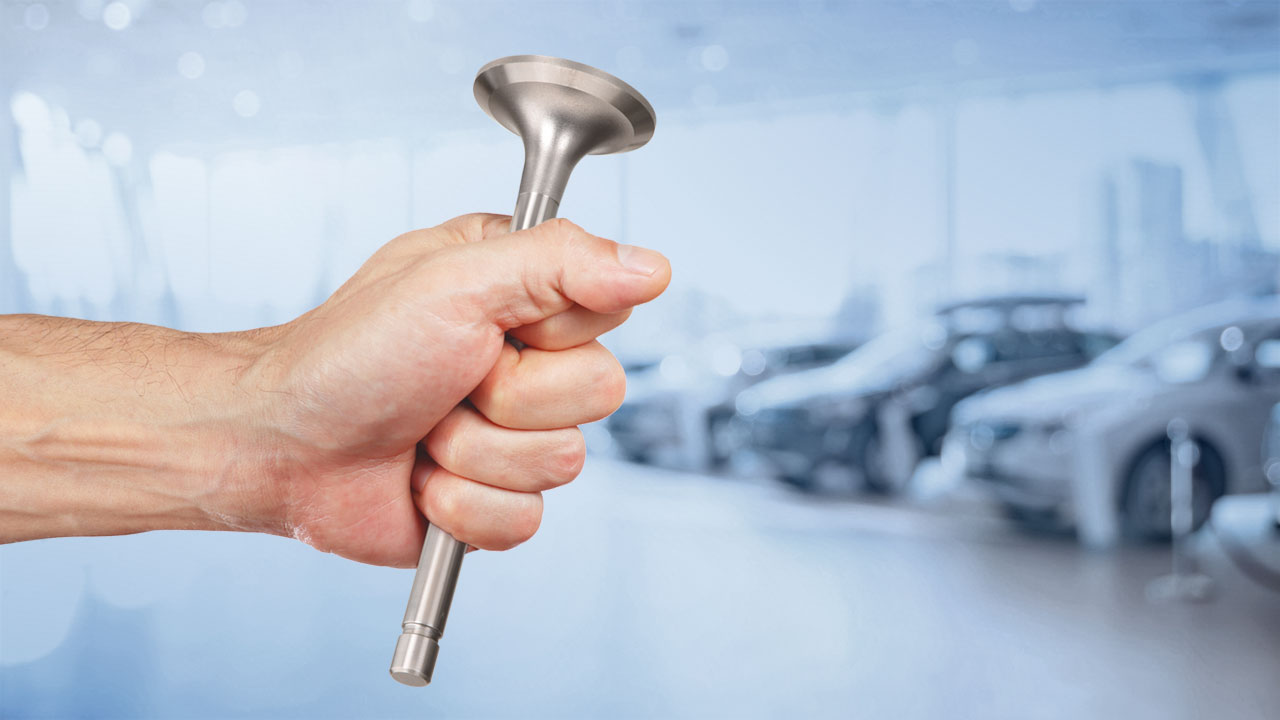
Material requirements vary significantly between engine platforms.
Passenger Vehicles
Passenger-car engines increasingly combine efficiency, compact packaging, emissions control, and long service expectations. Valve materials must balance performance, weight, durability, cost, and manufacturing consistency.
Commercial and Heavy-Duty Engines
Commercial engines often operate under sustained load and extended duty cycles. Exhaust-valve materials in particular may require greater resistance to thermal and mechanical stress.
Agricultural and Off-Highway Equipment
These applications can experience high load, dust, temperature variation, prolonged operating cycles, and demanding service environments. Material durability and stable performance become especially important.
Stationary and Industrial Engines
Long operating periods and consistent load profiles create their own requirements for wear resistance, thermal stability, and service life.
Marine Applications
Marine engines can introduce additional demands related to duty cycle, corrosion exposure, sustained thermal loading, and operating environment.
Therefore, no universal material specification suits every engine valve. The application determines the requirement.
The same application-specific approach is important in the aftermarket, where replacement engine valves must match the thermal, mechanical, and fitment requirements of the original engine platform.
Manufacturing Technology Has Evolved Alongside Metallurgy
Advanced materials place greater demands on manufacturing as well.
As valve steels and alloys have become more specialized, manufacturers have needed tighter control over:
- Forging
- Machining
- Joining
- Heat treatment
- Surface treatment
- Grinding and finishing
- Dimensional inspection
- Crack detection
Modern engine valve performance therefore reflects the evolution of both metallurgy and manufacturing technology.
At AVR (Vikram) Valves, engine valves are produced through an integrated manufacturing system incorporating controlled forging, precision machining, heat and surface treatment, inspection, and quality assurance.
With more than 3,500 engine valve types developed for compatibility with 220+ engine brands, material and process selection must accommodate a broad range of engine platforms and operating conditions.
The Future of Engine Valve Materials Is Application-Driven
The evolution of engine valve technology is unlikely to stop at a single alloy or treatment.
Engine designers continue to pursue greater efficiency, higher specific output, lower emissions, reduced friction, improved durability, and increasingly optimized combustion systems.
These trends will continue to place demands on valve materials and manufacturing processes.
Future development is therefore likely to remain focused on the same fundamental engineering objective that has shaped valve metallurgy for decades:
using the right material, in the right configuration, for the actual operating environment.
That may involve improved steel grades, advanced superalloys, more sophisticated surface engineering, optimized bimetallic construction, or other application-specific solutions.
But material technology only delivers its intended value when supported by precise manufacturing and disciplined quality control.
Material Engineering Is Only One Part of Engine Valve Performance
Modern engine valves demonstrate how a seemingly simple component has evolved into a highly engineered combination of material, geometry, treatment, and manufacturing control.
Martensitic steels, austenitic steels, Inconel, Nimonic, Stellite hard-facing, bimetallic construction, nitriding, and hard chrome each address different operating challenges.
The objective is not to use the most advanced material available. It is to select and process the material that best suits the temperature, load, wear conditions, engine design, and service expectations of the application. Material selection becomes particularly important in long-term OEM engine programs, where repeatability and application-specific requirements must be maintained.
At AVR (Vikram) Valves, decades of engine valve manufacturing experience are supported by application-specific material selection, controlled production processes, and quality systems designed to deliver consistent performance across diverse engine platforms.
Need support with engine valve materials, design, or application requirements? Contact AVR (Vikram) Valves to discuss your technical requirements.